Tag: All the feels

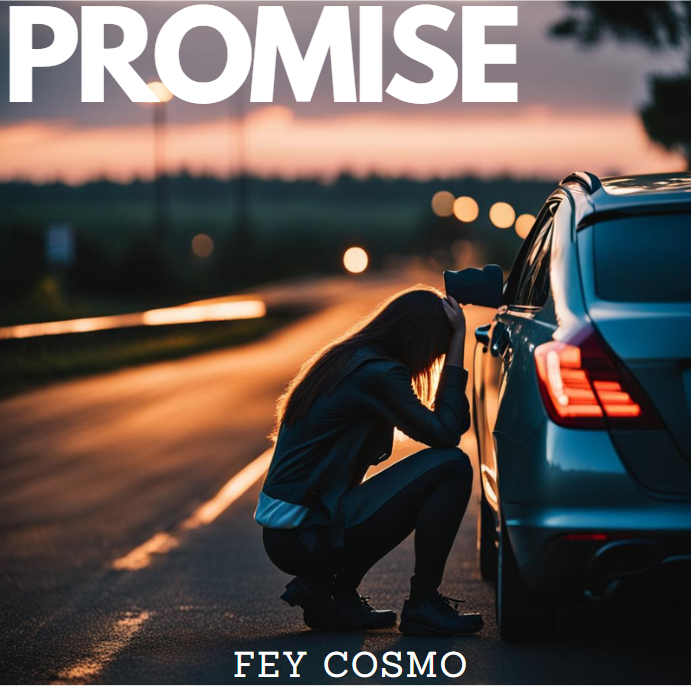
  • Promise: A Tale of the Past and Present

    Promise: A Tale of the Past and Present

    Dear Reader: The serial, “Brethren of Judas” is on a mental health/research hiatus, as the topic of coercion right now is a difficult one for me. Please enjoy ‘Promise’, a one-off story about the horrors of the past.

    TRIGGER WARNING: This contains confronting themes and is recommended for those aged 15 and up.

    The world of Katherine was last “real” when she dropped off Gerald, and he sprayed himself with cologne right before his date. She wished him good luck in hooking up with this random, beautiful stranger, and laughed when he replied, “I don’t need luck, I’m adorable!”

    The droplets carried the scent and dried it onto the seat until she turned on the heating. The smell drifted into her nostrils soon after and unknown to Katherine, triggered the present to melt into the past. Bad memories, normally banished to the dark closet of the unconscious, drifted to the surface level of her mind as she fumbled for lip-gloss, still driving. But as her hands gripped the wheel, she saw a man entering the convenience store holding a gun. Reality was still there, but somehow driving was the background movie to the all-too-real imposition of the past playing before her eyes. She knows to stop and ground herself when she has an episode like this, but there is a pane of glass now between the real act of driving and the voice screaming, “Put the money in the bag, bitch.”

    Control has left Katherine’s hands, although she grips the wheel there is no power to the movement. The speeding car does not move smoothly down the road, the driver is too busy reliving the man leaping over the counter towards her. He lands smoothly and shoves her down, smiling under his balaclava. Katherine is still behind the wheel, but all she sees is the man lying on top of her reaching up to the condoms behind the counter. His other hand holds the gun to her temple, and he fumbles to open the packet. Inside the car she is screaming to get off, take the money, but no one can hear her. She can barely hear her own voice as the memory overwhelms her further, her foot flailing as if knees are holding her legs apart. 

    The car barrels towards the two pink blurs crossing the street, the woman and her dog equally surprised at the erratic machine coming for them. Leash, raincoat, and the dog’s raincoat are all in the same shade of Barbie pink, designed to stand out but also protect from the elements, like the rain that threatens from the gray sky this afternoon. The squeal of the tyres cuts through the silence and the moist autumn leaves are scattered by the fishtailing swerve, but it is not enough to stop the car, just to slow it. There is a thump and the wheels struggle over something, but the driver does not stop. The man on top of her stopped only when he was satisfied and pulled off the dripping condom with the satisfied flair of a magician pulling a rabbit out of his hat. 

    Still high on meth, the thief runs away with a full backpack. For him, this robbery went better than he anticipated, and he genuinely wanted to high five someone as he deftly ran down the street. Katherine remained on the floor of her memory, but also in the seat of the car. She stopped the car as reality appeared through the fog, overwhelmed with nausea. Vomit lurched up her throat, then onto her shoes. With nothing left in her, Katherine blacked out against the cool metal exterior of the Saab. Time passes. 

    ****

    When my niece Katherine clattered noisily into the house, she began to empty her pockets of the soil and stones. I wanted to ask why but she was scooping her pockets frantically, unaware I was watching. Sometimes I hate how unpredictable she’s become, and I forget that she’s sick, but I’m sick too damnit. Still, I made a promise to her dead mother.

    She looked dishevelled, more of a mess than normal. That may sound high and mighty for a woman who shits herself regularly, but before the stroke I was perfectly groomed, thank you. As she finished raining debris onto the front hall table, she looked at me and remembered we live together. Her eyes were wild, the first hint of the low. No person who weighs as little as her should be sweating, but she was, I remember it. 

    “Aunty Jules, it’s just a small dent, I’m sorry. It’s probably nothing but I thought if it was the dog, I should bury it, I mean, I was going to bury it, that’s why I started collecting rocks and dirt to cover it up, but I couldn’t find it. There’s just a bit of blood on the broken headlight and some pink fluff. I didn’t see them I swear. I think I lost some time. I can’t stop shaking. I’m going to sip some of your brandy, just a little, I’m so cold and shaking.”

    She hit something with my car. My blood’s running cold.

    The clock reads 9:32 at night and my former self would have asked her what the hell took so long. Yes, my first response is anger because I still have feelings damnit, and it was MY car. I don’t recall her spacing out behind the wheel, but she might have. 

    True to her word, she goes to my liquor stand and pours herself too large of a helping of my brandy. Developed a taste for it after moving in, despite the effect on her blood sugar. Life thought it would be funny if her parents died while on holiday, making the black comedy of “Aunt and Niece” for the amusement of… who? The God of Unlikely Housemates? Tune in next week in Aunt and Niece, when a 19-year-old with no job, prospects or income moves in with a stroke victim. 

    Katherine reads me messages from her “Stroke carers support group”, where we’re all called survivors, instead of victims, but I can’t correct her terminology, can I? My stroke killed off the part of my brain that can connect words to my tongue, but I can still think. Right now, for example, I want to scream at her to change me, because I feel I’ve wet myself, but I can’t do it, can I? I’m a victim to the way my body feels now, the uselessness of areas that died off when I blacked out at work. I didn’t know I had the clot, let alone the heart attack that dislodged it. So, I don’t love the term survivor, because I want to do more than to have survived and I’m constantly disappointed I can’t do more with myself. Like, right now, watching her pour a second drink and down it. I bought that brandy in Yamazaki, damnit, and she’s drinking it like Pepsi. 

    For kicks, and to stave off insanity, I nicknamed my stroke, “George”. Same as my first husband, an arsehole I married when I believed in happily ever after, who left me for a cadet journalist who sauntered into our newspaper one day. She sauntered out only 6 months later, leading my husband away like she had a leash around his dick. George, the stroke, not the man, robbed me of a lot of things, but at least I’m still alive, even if that means taking in my pathetic niece as my carer. 

    But who’s caring for who, really? All her life, Katherine’s been thin skinned, a vulnerable little flower of a child who was upset by everything and coddled pretty hard by my sister Sam. They were never meant to have her; Sam and Keith I mean. Eight rounds of IVF and a tonne of money went into cooking up Katherine and for what? This bundle of nerves on legs staring at herself in my mirror like she’s forgotten who she is? I think she’s spacing out again. 

    She might have forgotten; I know that’s a possibility. I’d love to just ask but she’s so in her head now she wouldn’t be able to tell me. I know why, of course, she needs a bit of time to come back from whatever shook her so bad. The dog she did, or didn’t hit, with my car. 

    If I had my strength, I’d have checked my Saab myself. Actually, if I had my strength, she wouldn’t have moved in with me in the first place, no way. After Robert (husband number two, for those keeping track), I was enjoying my descent into cat lady solitude, until Sam and Keith took their ‘trip of a lifetime’ and drove off a cliff in the Knysna Forest. 

    I remember when Sam came over to tell me about their ‘trip of a lifetime’. Katherine was getting better, she said, so Sam and Keith were finally going to South Africa for its 4 X 4 driving. He was a mad outdoors man, that Keith, so he was gonna drag my sister to yet another wilderness adventure with nothing but water and a Jeep. She’d looked at me slyly, and I knew why, it was part of the bragging. They had the daughter, the adventure, the house almost paid off and what did I have? I have a good job, yes, but also a dead husband and no prospects. We lived in the city, and I still rented the same overly large townhouse I could barely afford as a widow. But I wasn’t moving damnit, because that would mean admitting Robert was dead and not just traveling somewhere. No way was I going to go into his office, his sanctum if you will, and dismantle it. 

    Turns out I didn’t need to be so precious about it. Katherine took his office as her room while I was recovering from the stroke and got rid of everything. And because I can’t speak, what the hell can I do about it? So, either good will or the rubbish tip got my treasures. 

    Katherine gets the crazy directly from Keith, I’m sure of that much. She’s looking for something in the fridge now. Now she’s moving to the pantry. She takes out a box of macaroni and cheese and shakes it, like she doesn’t quite recognise its contents. I can tell she’s spacing out, bad, and I watch her hands. Sometimes when she spaces out, she mimes filling the bag with money from the cash drawer. At night, I’ve heard her urging me to take the money, don’t hurt me, get off me. I’d run and comfort her, but like I said, can’t move. 

    He did hurt her, the guy who robbed the store she was working at. He didn’t need to rape her, in fact that’s how he got caught, but he got greedy, I think. In the instant he waved the gun at her, she gave in and would have handed over anything. That’s the point when he got cocky. It would have taken all of two seconds to realise he could get more than the store’s takings. 

    I cried with Sam when it happened, it shook us all so badly. Seventeen years old, first job, saving up for a car, and then that goes and happens. I tried to joke that it was the shitty luck of the Laylor sisters, but Sam pointed out neither of us are Laylor anymore, she’s a Kruger and I’m a widowed Price. She made me promise, right there and then, that if anything happened to Katherine, I’d be there. Sam added, because she was no fool, that if anything happened to her or to Keith, it was up to me.

    Oh, that Keith. That’s also where Katherine might have inherited her diabetes, but unlike Keith, Katherine is not very careful with it. We liked to joke that Keith was a modern-day Viking, all muscles and hair with his strong outdoorsy spirit and extreme care for his diet. When Katherine remembers to eat, it’s probably not the right food for her to start with. She leaves it everywhere and literally forgets she made it and I can’t even clean up the cups of tea she leaves lying around the house. And it’s my house.

    Like now, she’s absent mindedly munching on some cereal from my pantry, just a handful of it. Did she have her insulin? Christ, it’s not my job to remember, I’m in a wheelchair and I can’t speak, how can it be my fault? And yet, I feel I should try to do something. I’m low on battery though, and I’d rather she change me out of my wet clothes. She’s wobbling, like her legs aren’t working. I want to scream TAKE YOUR INSULIN DAMNIT, but all I can do is grunt and throw my hand against the knobs of the chair to make it lurch a little at a time. I’m grunting and drooling with frustration as she stares blankly ahead. 

    I’m trying to manoeuvre into her sightline, but I can tell she’s in deep. I could grunt, but when she stares forward like this, she’s fully in it. I remember Sam telling me about Borderline when she first got diagnosed and it certainly explained a lot, but since she moved in with me I can really see it. She doesn’t get mood swings as much anymore, thank you mood stabilisers, but she’s prone to spacing out like this. I mean what a combination, a lifelong diabetic, then a personality disorder on top? Shitty sprinkles on a shitty sundae.  

    Suddenly she makes eye contact and is walking over to me.

    Taking my wrist for attention, she murmurs, “The lady walking the dog was also in pink, Aunty Jules. Like they were matching. I didn’t see them. What were they doing in the middle of the road? I stopped and went back when I realised what I’d done but there was blood on the lights, and they might have fallen in the embankment. I think I lost some time!” Her hands are chest high, and I see she’s holding the invisible steering wheel. 

    “What if it was the lady?! What if it wasn’t the dog, but the lady? Did I kill her? I can’t remember! I spaced!” Her fingers were clammy, and she seemed weaker by the second. She slid into a chair at the kitchen table like she was half melting and called out, “I don’t remember what happened, there was pink, the dog… I’m…” 

    She put her head down on the table and her fists continued to hold the steering wheel that only she could see. Panic reached into my chest and grabbed my heart with its claws. If she lost consciousness, what could I do? Could I get her insulin? My chair was running low on power, and my forearms don’t work much, but she needs it to live and might be going into a low right now. She’s been in a coma before, but I thought we’d all learned our lesson. I can’t inject her; all I can do is call an ambulance, so I start to steer to the phone. 

    Three meters away from the phone on the table, the battery is finally drained and the chair stops. Katherine is not great at remembering to charge it so normally I keep an eye on it, but I can’t manoeuvre my hand around the cable to plug it in, I need her. I turn my head and see she looks asleep but pale on the table. What now? What the hell do I do now? I’m turning my drooling head to both sides, looking for a way to move myself and realise the last thing I can do is going to hurt, but it needs to be done. 

    Heaving my mostly useless hips to the side, I throw myself out of the chair and land heavily. It hurts like a bitch to land but we’re running out of time, and I need to get to the phone. I wriggle as fast as my useless body lets me, barely moving across the floor. When I get there, I can’t reach up and get the phone, so I knock the table legs with my shoulders. If I can get it to fall, I can dial it. The landline, a relic of an older time that my sweet Robert insisted on keeping, finally clattered to the floor beside my neck. 

    I mashed the keys with my face until it rang. All I could do was grunt, but that would be enough to get the ambulances attention and hopefully trace my address. No point in wishing I could speak, so I just lie still and hope they run to her first. Besides, I only fell a little and despite all my complaining, I made a promise to look after her.


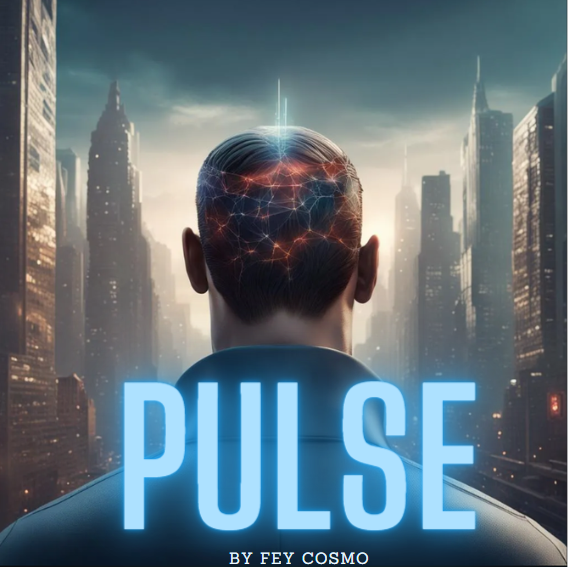
  • PULSE: A new sci-fi story

    PULSE: A new sci-fi story

    Lovingly dedicated to the real Brett

    When the first flesh-to-fibre implant was going to be released for the public, my darling Brett was one of the hundreds who slept on the street to be at the front of the queue. As a healthy 35-year-old with an interest in computers and a love of new tech, he was the perfect test subject to see how effective this new form of browsing and gaming could be. If he’d had a fuller head of hair and less crooked teeth, he could have been one of the poster boys, he was THAT enthusiastic about it.   

    The media was as frenzied as sharks with chum: this was the breakthrough of the decade and was touted as the start of the new age of ‘smooth computing’. There had been opposition from various church groups, of course, but ultimately the desire to not just USE the computer, but BE it, was too strong. Since the first neural implants became accessible for medicine, the lawyers had foreseen a time when they would have to defend the right to choose an implant when it wasn’t strictly needed and had been quietly preparing in the background. It was about the freedom to choose what you want for your body- and allegedly, nothing to do with the fortune to be made.

    The implant didn’t just make it possible to browse the internet without a device, it also allowed for a totally seamless integration of the conscious thoughts and a personal, impregnable computer. The line between artificial intelligence and its users had been blurred for many years, but this device, the Verstand model 4, destroyed the line all together.  Through a six-hour operation, the implant would be connected into the occipital lobe with delicate fibre optic nodes coated in an artificial myelin sheath grown from the body’s own proteins and fats. Any thoughts or sights you wanted recalled forever could be captured with flawless clarity. The users were told to imagine being able to watch content projected as an overlay of their own vision or being able to stream an entire day of adventuring, hands-free. Many of the people in the line wanted the Verstand4 purely for the promise of recording every moment. Not Brett. He couldn’t wait to play computer games without controllers, as the implant promised. 

    For many years, the German company that made the Verstand was the world leader in prosthetics, so when the prototype for Verstand1 was tested and it returned all the functions to the stroke users it was tested on, the leap from spinal cord to the brain was an easy one. They took a financial hit when Verstand2 was too closely positioned to the amygdala and gave the subjects regular panic attacks. Naturally, Verstand3 was moved and refined and finally upgraded enough that Verstand4 was deemed commercially and medically viable for users who met the criteria. 

    He sold his vintage car and put down the deposit for the implant the day he was given clearance to have the surgery. My sweet Brett, all he wanted was to run around a version of ancient Greece, slaying digital monsters. 

    To even be able to stand in the line there was a whole process. The testing was arduous, and to me, cruel. Users were not permitted to have any form of previous mental health condition that could tarnish the interaction of the implant with the brain. Some very important celebrities were declined clearance on mental health grounds, so there were lawsuits filed for discrimination. Ironically, when Brett had his accident, they were still tied up in the courts. Users couldn’t be colour-blind, be on the autism spectrum or even have any limbs missing, for fear that the implant would not know what to do with phantom limb impulses. Candidates also needed a relatively high IQ because it was honestly believed that the stupid bell curve of “human intelligence” could determine if a person would know the difference between reality and what the implant was showing. We had an argument over this during the application process and I remember how I made a big deal out of moving his pillows to make him sleep on the couch. It boiled my blood to think the implant would ONLY help a limited number of very lucky people- not those who would really benefit from the assistive aspects. Brett had sneered that I was jealous because my depression excluded me from even applying. He walked out after saying that, realising he’d gone too far.

    I lay in our bed, boiling with rage that night. I was still a full-time teacher and had met many students who would do wonders if they were allowed more access to this particular technology. I didn’t see the Verstand as a blessing then, and I certainly don’t now, but at the time I was up on my high horse about how they should not be thinking about how to help the elite applicants have even MORE benefits that regular people couldn’t access. All I saw was how the technology would have helped those who really needed it. I left early the next morning after the fight and went straight to see dad. 

    Harrington Gardens was only five minutes away, but it still felt like driving to another country. It was such a carefully regimented, moderated environment that it didn’t feel like a care facility; it was run like a prison for those who dared to age with money. Dad was in his room, which was set up almost identically like home had been. The goal was to ease the transition, but it was still little more than a childcare centre for the elderly. There were photos of mum and me everywhere in case Dad thought she was alive again, or maybe to remind him that I was nearby and didn’t visit nearly enough. He was having a sharper day than he normally did and greeted me warmly as I put my hand on his. 

    “That magpie I like to watch hasn’t come to the tree yet,” he said, staring past me at his window. 

    “How’s the knee, dad? Are you warm enough?”

    “I want to do something about the weeds: you can’t get the help, you know, no one wants to work anymore.”

    “Are you hungry, dad? Do you want a cup of tea?”

    “He hasn’t come yet. He likes to sit right there where I can see him, and he’s got good eyes.” 

    “Dad, I had a fight with Brett.”

    “I left the remote control somewhere, see if you can find it for me, will you…”

    There was no point of course. I could have been any carer or nurse, or even the cleaning lady, the conversation would be the same. And if I’d shown up in the evening, I had no idea what side of him would come out. He would be confused, that much was certain, but it could be about anything, and he might not even speak to me. I kissed his forehead and left to cry quietly in the car. 

    I apologised, of course I did. It was silly, we’d already sunk thousands of dollars into his application, medical testing and all the other legal requirements. Thanks to our collective efforts, my precious Brett was on the short list by that stage. He could practically smell his spot in the line with the other frantic fans. He would be with the others- all the tech influencers, posers, and people with too much money who simply HAD to have something that so few people had access to. Brett was not like them: he was a regular, wonderful man who just wanted to play whatever version of his favourite city builder game was available. Making whole new places rise out of the ground like the conductor of a gaming orchestra, waving his hands as if he was there in person: the unquestioned God of Brett town, with the fate of thousands of digital dots at his fingertips. Despite all my boring, high-minded rhetoric and moral objections on the matter, I adored his child-like, innocent desire to play. 

    The irony of the events to follow did not escape me. 

    He had a month of joy where I barely saw him, because he was playing and browsing so much. All the leave from work that he had available to him was given over, so he could fully immerse himself in every function Verstand4 could provide for him. At first, he was diligent about trying everything, but eventually it was just games, games, games. He’d always been very fond of simulators, and he went head-first into them like never before. A couple of times I had to remind him to sleep, eat and bathe. With the excitement of a child coming home from the first day of school, he talked to me about the amazing possibilities for me as a teacher. Imagine all that I could learn! But I remained “his little luddite” and kept the experience at arm’s length. I still loved his company, but it was hard to compete with the entirety of the internet, his new mistress. Yes, I was THAT petty. But I missed when his attention was shared between us more equally. 

    My bitterness, now, feels like a permanent rotten taste in my mouth after the Pulse. 

    I no longer teach history or literature, because I am a part of it, and it’s interesting that I mentioned my jealousy, as the terrorists have come out and expressed the same thing as a sort of excuse for what happened. They wanted what they couldn’t have, pure and simple. It was more damaging than gluing themselves to the road outside the headquarters or padlocking themselves to trucks carrying parts. It was misguided activism, yes, but a part of them simply coveted the experience of the lucky users. Those who orchestrated the Pulse were not just impatient to experience Verstand4: they were angry it wasn’t available for everyone. I understand because I thought similar things. 

    My beautiful Brett was nearing the end of his leave time and was using Verstand4 to find us a place to visit for our anniversary. It was a big deal to us, we’d made it ten years after my own sister had given us a year, tops. He wanted us to revisit the small island we’d honeymooned on and was exploring the facilities that morning. At least one of his last, cogent thoughts was of how gorgeous it would be to snorkel through the water and lie on the warm sand dunes as the sun went down. He was telling me we’d both need new bathing suits when he suddenly fell over. 

    I didn’t understand it at the time, but the activists, who were really terrorists, had broken into the headquarters where Verstand4 was manufactured and specifically targeted the server where the users were encouraged to store their memories. They were backed up, but it needed just one blue screen of death for all the users to simultaneously lose access to it. My sweet Brett had once joked that he might freeze up and must be reset. He had laughed and said, “You’d have to find a way to turn me off and on again.” I had poked him in the belly and chased him around saying, “reset”, before we’d collapsed onto the couch and made warm, laughing love. That was a mere week before he had the implant installed, but now that he HAD blue-screened, it was no longer a joke. 

    I’d seen seizures before, of course I had. I also knew CPR, which is how I kept him alive until the ambulance came. But I couldn’t stop parts of his brain dying, the delicate synapses were instantly and totally deprived of oxygen rich blood by the implant setting fire to his mind. The carefully engineered cerebrospinal fluid conducted the pulse throughout the brain: a bolt of lightning burning through every axon that it could reach. He twitched horribly and moaned, contorting his limbs as if grasping the air for help. His mouth opened all wrong, to the side, and his eye drooped like he couldn’t hold himself up. He tried to say my name, I know he did, but he no longer controlled his own tongue. His crotch thrusted sharply, and I saw a pool of urine appear on his trousers as his leg kicked randomly. I tried to hold his hands and stabilise his movements, but his fingers became misshapen claws I no longer recognised.

    I only left for a moment to ring the ambulance in a half screaming, half crying voice and that’s when his heart stopped. I said though, that I knew CPR, so I used it. First time ever I had to use it, but I was glad for my mandatory training then, because it saved him. We’re now world famous, because only three people survived the Pulse attack, and my amazingly tough Brett was the oldest one. 

    It was international news within minutes and the internet damn near exploded with conspiracy theories and misinformation. Was it a malfunction or a coordinated attack, how could this happen, blah blah blah. Whatever was being said never reached me until months after, because those first two weeks were only about keeping my dear Brett from dying. The doctors outdid themselves trying to help and blessedly, thankfully, they did not demand that I leave him alone to rest. Eventually, I was told it was a sort of digital stroke, and he had no chance of recovery. The Verstand4 had a power source and it overloaded, thanks to the terrorist’s commands. Despite that, my hand was practically fused to Brett’s, even when he slept. When he was able to drink, I was there to hold the straw. When he was able to eat, I fed him. 

    Selfishly, I needed to be there. I needed to see for myself in real time how much of my husband, my darling, was left to me. That is all I could think about. Whether his eyes would still sparkle when he laughed at one of my terrible puns. Whether he would remember the dates when we met, kissed, and married. Whether he’d remember how to mould his body to mine when we were intimate. My need to recapture what was left was all that drove me and all that moves me still, because I live in the hope he will return. 

    Verstand5 will not happen for a few years, that much I know. There are too many bugs to work out and although the consumer demand is there, the world cannot forget the faces of all of those who died and worse, the contorted, damaged faces of those who lived. The company have paid for everything Brett and the other two need, but the three survivors remain a pebble in the shoe of progress, because no one can guarantee that an attack like this will not happen again. 

    Where is my precious Brett now? He is in the custom-made bed the company has provided, watching a documentary about ancient Greece. He is drooling slightly, and I will be feeding him later. He cannot speak, see out of his left eye, move his limbs, or use the bathroom alone, but he is still my darling husband. Inside his damaged body, there is still the boy I fell in love with, who gazes at me now, stroking a toy figure of Hercules. 

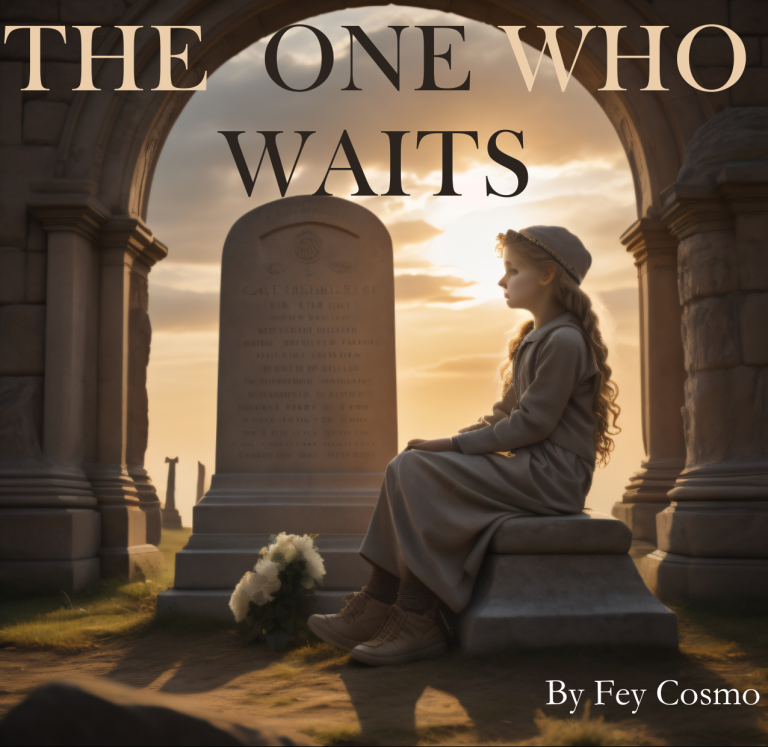
  • The One Who Waits: A new tale of tragedy

    The One Who Waits: A new tale of tragedy

    The grieving family arrived too close to closing time and were forced to say hello and goodbye almost in a single breath. When you live at the cemetery, you learn that the face of sadness can be a mask of confusion when you simply don’t know what to do. These people moved with characteristic indecision, not sure if they wanted to express grief or mask it.

    I watched them from behind a nearby tree, noticing everything, as is my habit. The mother held the toddler, confusing the girl with her stifled tears. I see the father, hands in pockets, his posture screaming with reluctance. Only the teenage boy interested me as a curiosity, as he, and only he, bent over to brush debris off the headstone.

    I bent low, fascinated now at how these four very different beings moved over soil where their relative was buried. Focusing my senses on them, I probed for answers, and the pictures formed in my mind. The man 6 feet down had been her father, the crying older woman, and I sensed he had never liked this husband she had chosen. Ironically, I felt the same stalwart stubbornness in him, a bonus feeling from being one of the dead who still gets to walk the Earth. Stretching my senses further, I gleaned a wave of guilt from her; she felt she didn’t visit enough, talk enough, do anything quite enough, and now here she was. Too little too late, he would have said, with his taciturn honesty.

    Inwardly I rode the wave of guilt she was thinking about, and it crashed to its natural conclusion; she had done all that she could with her children, husband, and job. Even as she silently stared at the grave, the little girl squirmed and began to babble. In the guise of comforting her, the mother buried her face in her daughter’s hair and wept.

    The teen boy had been dusting the grave with his sleeve and now traced his finger over the delicate letters and numbers. He did some math. I felt he wanted to confirm that longevity ran in the family, but when he turned to look at his mother, he thought better of it. Instead, he commented to his father that it was a nice headstone and Poppa would have liked its elegant, simple look. He had an eye for detail, that boy.

    The father set down the yellow roses and awkwardly comforted his wife while sneaking a look at his watch. Even from my concealed position, I could tell he felt cold and uncomfortable. I resented his lack of interest and focused hard on him, reading as hard as I could. His lifeline was not as long-lived as hers, and I saw many hours in a lonely hospital before he passed. Then, in his final days of half-awake sedation, he would crave his wife’s attention and wonder why his daughter and son do not visit. Something in the vision showed me their divorce and it seemed fair, apt even.

    They left soon after, the mother having taken a moment to say something I did not care to hear. When she approached alone, having handed the toddler to her husband, I wrenched my senses away and gave her privacy. It felt wrong to invade that moment, and I will never know what caused her cathartic sobs.

    He would never hear it: her father, I mean. Part of my power is seeing where they go, and for this man I sensed a golden, warm light. He dwells in the hereafter I have not yet been to.

    I watched the family walk down the hill and back to the car while I drifted to the other part of the cemetery to make a visit of my own.

    Since I am neither fully dead, nor fully alive, I have my own way of looking at events like this. Part of me dislikes the empty spectacle of visiting now, when nothing more can be done. But a wiser part of me envies their continuing quest to make something right and repair what is permanently broken. They know it’s futile, but they do it to soothe a part of themselves, the visits being the public balm to private wounds.

    I lived long ago, but grief has not changed. These days, people seem to need an audience for everything, and they’d rather connect through their devices than in person, but that was the most notable of changes I had seen. They still wept as they had before. If anything, there was more regret now than I had previously seen and I would know: regret could be my middle name.

    I float past graves and markers, stones growing ever older in time from one end of the cemetery to the other. They continue to pass on but there is only so much room for the dead amongst the many buildings for the living. Will the living ever reach a point past polite decorum and insist that burial is too decadent? I do not know how much time I have left, but I observe more and more who chose to be ash in the wind rather than in the soil. Not that I had a choice.

    Proceeding to the oldest part of the cemetery, death becomes more grand, or at least the monuments do. She is near the ostentatious angels and gaudy mausoleums families used to be proud of. She could not afford an angel when she died, but the one next to her cast enough of a shadow that she could enjoy that borrowed glory. As is my custom since I found her, I focused my corporeal energy and cleaned the dust from her name plate.

    Helen Dorothy Pleasance

    13th December 1902 to 5th March 1944

    We cherish her always

    She was my mother, dead at forty-one and laid here. For many years I wondered about the bird flying out of a basket, so carefully carved by skilled hands on my mother’s headstone, and considered the reasons it was put there. To me, it represents her humble origins, as we were always poor, and how the family worked hard to make something of themselves. But that is one of many questions I would ask if she was still here, the way I seem to be.

    Somewhere behind me, the cemetery is closing its metal gates and I sense an impatient guard reluctantly ambling amongst the headstones, but he would never spot me. I let myself fade just enough that he would mistake me, overlook me, and I could continue my version of mourning.

    When I lived, from 1922 to 1930, I was one of two happy children, but as the oldest, and a girl, I had to be sold when the family was at its poorest. The farm, once a source of food and life, had turned to dust and my parents were desperate. I remember a vague argument about having land, precious land, but unless the children could eat dirt, there was no value in it.

    I was only eight. My brother was merely two years younger than me, but he was the greatest achievement of both my mother and father—there was no chance he would have been made to suffer—that’s not why golden boys are born. No, when The Gentleman took an interest in buying me from my mother, there was only a brief hesitation and then, I’m sure, relief.

    My mother and father worked it out and I was sold for an envelope full of money. Is it good that I do not know how much I was worth? If I could sleep, it would be harder to close my eyes at night knowing the paltry amount. Better that I just remember the moment I stood with a wooden box of possessions on the front step. Then he takes my hand and leads me away. I realised too late that I will not be going back.

    Certainly it could have been worse, I know that. I was never a big talker; instead, I listened, and many times I heard maids and cooks talking about children sold to be playthings of older men and women or sent to work in dangerous factories to be horribly mangled. When I lived with my parents, I saw my mother burn her hand on the stove and to me, that is all factories were: giant stoves that could sizzle the skin right off the bone. At least I was not sent there. I spent a lot of cold nights in the servants’ quarters and went to bed hungry, but yes, it could have been worse.

    I was fortunate to have become a maid and companion to the Gentleman’s daughter Marjorie Elsemore, until we were playing in a river and I drowned on a spring afternoon.

    We’d been playing, squelching in mud, pushing each other happily and daring each other to go further and further toward the middle of the river where our feet no longer touched the bottom. I was winning because I was taller, but I could not fight the strange pull that dragged me under when I went just a little further in than Marjorie had. I crowed with joy that I was braver, “Queen of the River!” I yelled, but then I lost my footing and the game ended. Well, the river had been playing its own game and I lost that day.

    I knew something was wrong when an instant later (it seemed), I was looking at my body from the edge of the river. I could see myself floating down the river as Marjorie screamed herself hoarse and eventually, someone came to get me. Confused, I tried to touch my hands, my hair, the water, but my fingers passed through as if I was made of air. Marjorie could not see me, but I could see them, all of them who came to help. I had never in my life been so popular as I was moments after death.

    They tried to shield Marjorie, but bless her, she cared for me and was very upset. When I concentrate, I can hear her howls clearly. Over time, I’ve watched her grow into a fine woman who made her family proud. When I am not here, I visit the facility for older people where she lives, my dear friend, and I try to watch her without giving her fright. She is still as elegant and stately as ever, age having not taken her dignity yet, and I feel a strange pride for having been there when she was just a little girl.

    Her family honoured my passing by burying me in a quiet corner of the Elsemore gardens, amidst deceased pets of Marjories, near a stone bench she would often sit at. It is a beautiful place I have only visited once. It is full of life now and constantly busy as the house has been turned into some sort of hotel. People have even been married at the river bank right near where I died and if I had a voice, I would laugh.

    So, dear reader, why do I come here? When the world is available, why keep returning to this cemetery and its tidy rows of strangers?

    I will answer, as I sit as before her grave. I am waiting for my apology.

    I will wait until the day Helen Dorothy Pleasance returns from her personal, golden heaven and says, “Sorry for selling you.” I want to hear her say, with tears in her eyes, that she was wrong to trade me, because I was not a commodity: I was her child.

    I wait, and I wait. I have waited more than the fifteen thousand days she lived. 

    I am determined to remain until she returns. In my mind’s eye, I see her running towards me instead of walking away. I hear her calling me to her open arms instead of turning her back to me. And rather than accepting politely with downcast eyes, she proudly spurns the money. “No amount of money is greater than my love,” she will say, and she will wrap me up in herself as only she could, saying, “I’m sorry, I’m sorry.”

    The moon will rise and find me waiting, patiently upon the spot where her earthly remains rest and I wait for the afterlife that is the sound of her voice.


    All the feels app for RPG equipment Arkham Horror Barbarian talk Betrayal Legacy board game night co-op adventure Competitive card games cooperative board games Cult Cypher System Demons dm tips dnd advice dnd dice dnd for beginners Dungeons and Dragons Fiction FictionFairy Fiction Fairy Fighters Forbidden Island Gloomhaven Horror How to play a Barbarian how to play dnd how to start dnd lithgow dnd Lost Souls Bookshop Ortug Ortug RPG Advice How to play a Barbarian Ortug the Barbarian Robinson Crusoe roleplaying games Roll20 RPG advice RPG games Shadowrun Short Story Star-Fall RPG starting dnd strategy tabletop gaming tabletop rpgs The Crew